
History of Goodwick
Goodwick in English, Wdig in Welsh, believed to have originated from old Norse Goddarvik, meaning Good Bay.
While archaeological and historical evidence suggests that the area around Goodwick may have been inhabited in ancient times, for much of its early history the village remained a small, quiet cove.
History of Goodwick
Its sandy beaches and natural harbour made it ideal for fishing and small – scale coastal trade, but it was little more than a cluster of cottages and farmland set against the rugged Pembrokeshire landscape.
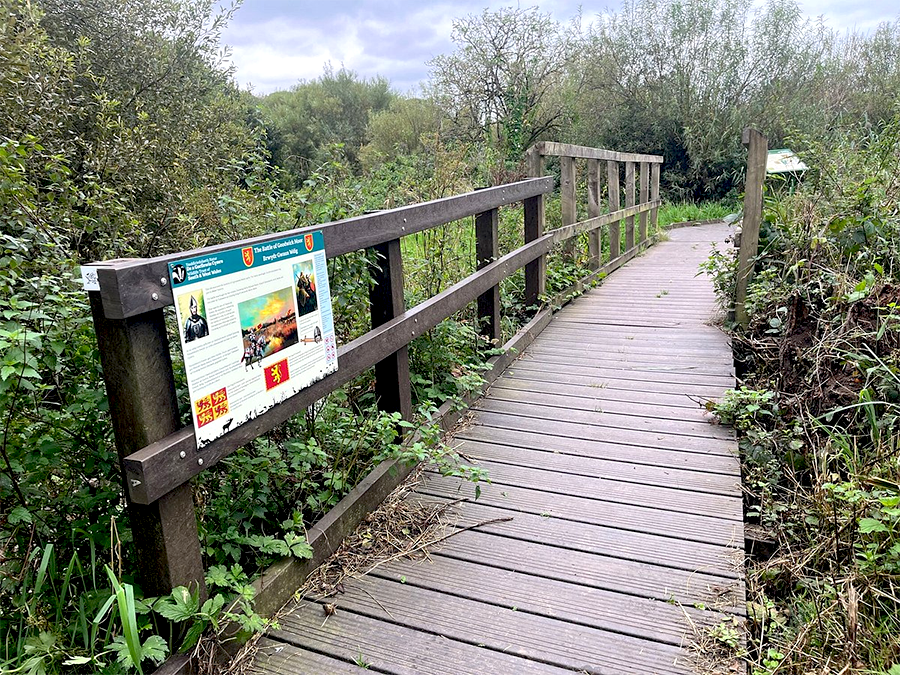
Goodwick also bears witness to a more turbulent chapter in Welsh history. In 1078, the area was the site of the famous medieval Battle of Goodwick Moor, a significant conflict between the kingdoms of Gwynedd and Deheubarth.
The battle was part of the ongoing struggles among Welsh principalities for territory and dominance in Wales. Gwynedd, under the leadership of its ruler Trehaearn ap Caradog, successfully defeated the forces of Deheubarth and their leader Rhys ap Owain. This victory not only consolidated Gwynedd’s influence in the region but also shaped the political landscape of medieval Wales, influencing power dynamics between the northern and southern kingdoms for decades to come.
Thus, even before it became a harbour town or a site of later historical events, Goodwick’s landscape bore witness to both the quiet rhythms of coastal life and the dramatic upheavals of medieval Welsh politics.
It later became a coastal settlement, dominated by simple cottages and farmland in the 17th century. Its location near Fishguard Bay gave it a naturally sheltered harbour and access to the Irish Sea, making it an ideal spot for fishing and small-scale trade. The early villagers lived in close-knit communities, relying on the sea for sustenance and commerce, and the landscape remained largely untouched, with sandy beaches, cliffs, and rolling green hills.
The area was remote, and life followed the rhythms of the sea. Fishing boats set out with the tides, while local farmers cultivated the fertile land behind the coast. Despite its small size, the village was known locally for its serene beauty and clean, sandy beaches.
Goodwick’s history took a dramatic turn during the last invasion of mainland Britain in February 1797. The French, seeking to disrupt Britain during the Revolutionary Wars, landed at Carreg Wastad Point near Fishguard, close to modern Goodwick. Around 1,400 French soldiers, sailors, and irregulars came ashore, expecting to advance inland with little resistance.
What they found instead was determined local opposition. From Y Bigney Hill and surrounding areas, local women – including the legendary Jemima Nicholas – played a pivotal role in the village’s defence. They waved banners, shouted, and created the illusion of a larger army, unnerving the French soldiers. Some women even directly engaged the invaders, wielding farm tools and pitchforks.
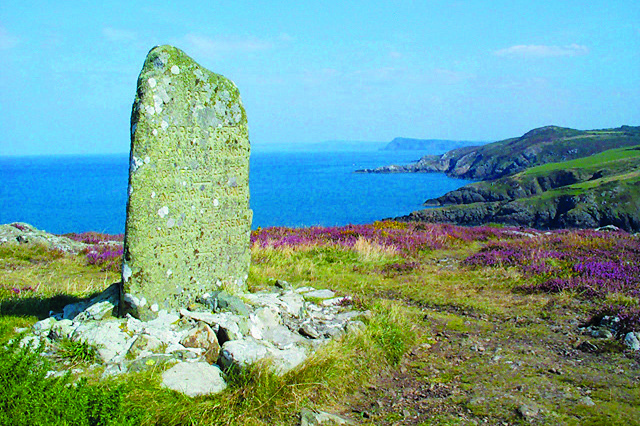
The French were trapped near Goodwick Sands, where the combination of local militia, armed villagers, and psychological tactics forced them to surrender. Colonel William Tate, the French commander, capitulated, marking the event as the final foreign invasion of mainland Britain. The surrender was formalized at the nearby Royal Oak Inn, cementing Goodwick’s place in British history.
Before the advent of modern industry, Goodwick’s coastline was also a haven for smugglers. The quiet beaches and hidden coves made it easy for contraband – often spirits, tobacco, and textiles – to be landed secretly under cover of darkness. Tales of these clandestine operations became part of local folklore, adding an adventurous edge to the village’s otherwise peaceful life.
Smuggling thrived because the rugged terrain and remote location allowed locals to evade customs officials. Many villagers, particularly fishermen and sailors, supplemented their incomes with these secretive activities, weaving a shadow economy into the fabric of the community.
The quiet character of Goodwick began to change in the 19th century with the arrival of the railway and the construction of a modern harbour. The Fishguard & Goodwick railway station, opened in the late 1800s, connected the village to the wider region and increased trade and mobility. Soon, the village became a hub for shipping and passenger ferries, cementing its strategic importance along the Irish Sea. Around the same time, brickworks and small industries began to emerge, providing employment and contributing to the growth of the local economy. Goodwick’s High Street gradually developed to cater to residents and visitors, with shops, pubs, and services forming the heart of the village.
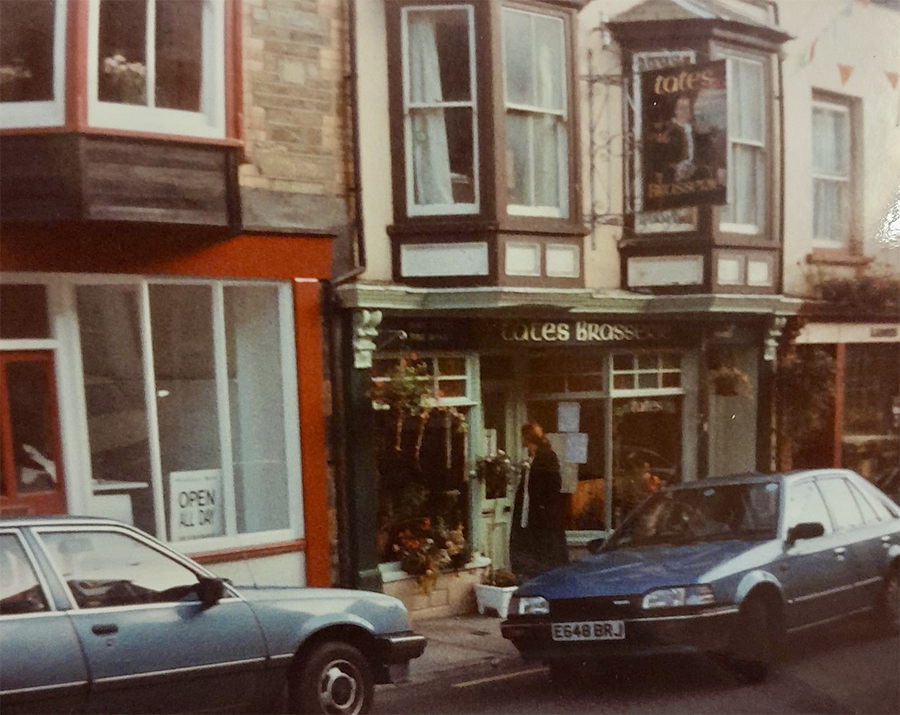
The harbour attracted not just commerce but also tourism, as visitors came to enjoy the clean beaches and scenic coastlines. Fishing remained an important livelihood, and maritime traditions continued to define village life.
Today, Goodwick is a charming blend of history and tranquillity. The town retains the quiet beauty that first drew settlers centuries ago: sandy beaches, cliffs, and rolling hills remain largely unspoiled. The High Street, though modest, still serves as a community focal point, with small shops and cafés preserving a village atmosphere.